
Party building and gear
You build party members from a wide array of items and gear, and a custom animation layering system renders what they wear. Palette swapping multiplies the same hand-animated assets two, three or even ten times for more customisation.
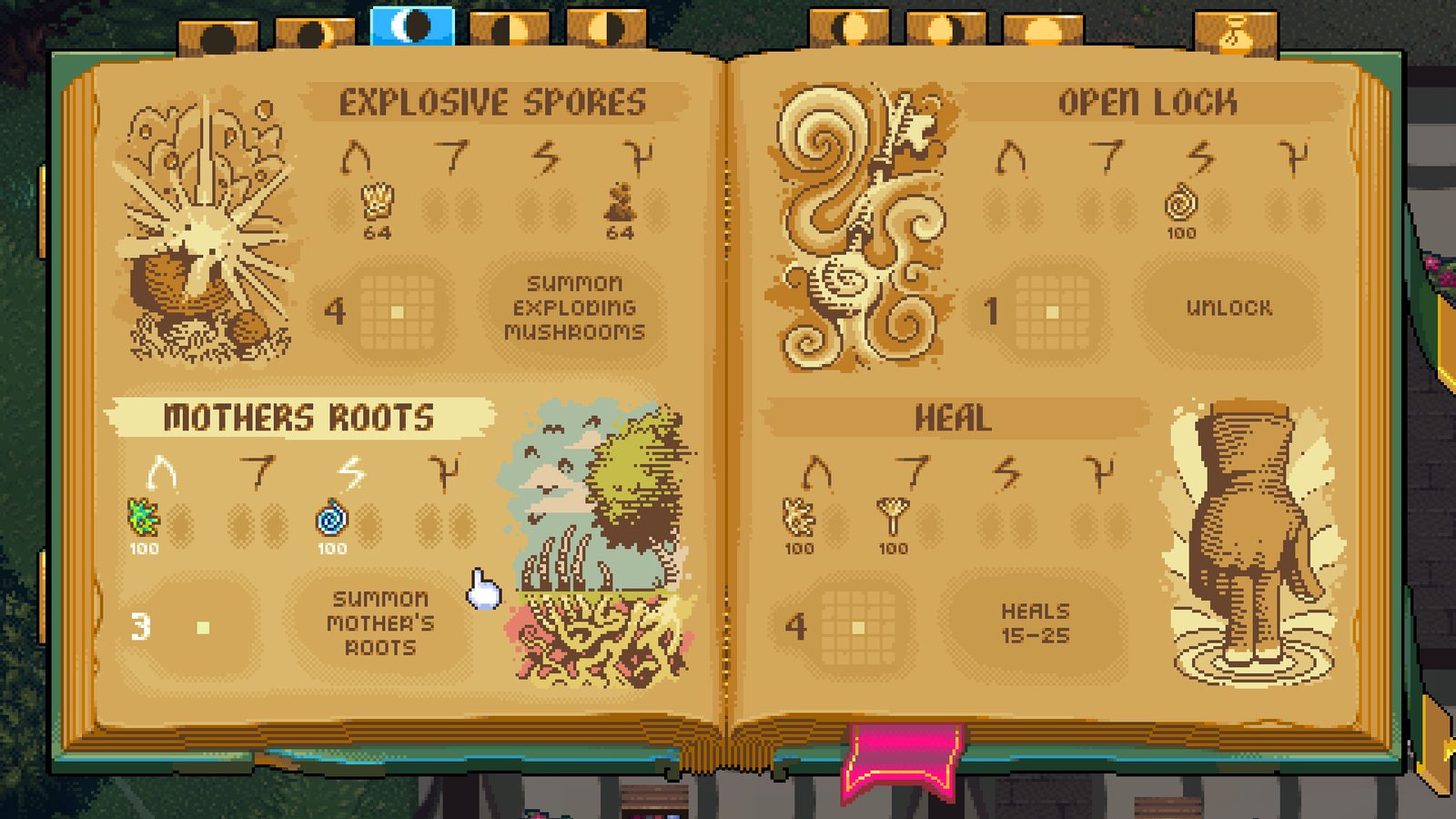 Official Steam screenshot
World of Anterra does not hand you a class list. It hands you a party and a pile of gear. The store page says you "build your party members with a vast array of items and gear", and then it explains how that gear becomes visible: a custom animation layering system that applies to party members, NPCs and creatures alike.
Two systems sit behind that sentence, and both have dedicated official write-ups. The first is the layering system itself, which lets hand-drawn sprites wear combinations of armour and clothing. The second is palette swapping, which multiplies the same hand-animated assets by 2, 3 or even 10 times and, in the studio's words, gives the game "many more options for player customization".
Gear as the build
Because equipment is the stated customisation layer, the party screen is the character sheet. There is no published class roster to plan around, and no skill trees in the announcements; what the studio has described is a system where the items you find define what a party member can do.
| Layer | What the official material says |
|---|---|
| Party members | Built from a vast array of items and gear |
| Visuals | Custom animation layering system renders the gear on the character |
| Scope | The same layering applies to NPCs and creatures |
| Variety | Palette swapping scales hand-animated assets 2x, 3x or up to 10x |
| Interface | The UI is built around tactile items and icons rather than menus and text |
| Progression | Tied to the game's described "deep progression systems" |
The interface line matters more than it sounds. If the game shows you items rather than stat tables, then comparing two helmets is a visual act: you look at them. That is a deliberate choice for a hand-drawn game, and it shapes how you will plan a party.
How animation layering works
Hand-animated 2D characters are expensive. Every new piece of armour normally means redrawing the character in that armour, frame by frame, in every animation. The layering system breaks that: the base body is animated once, and gear is drawn as layers on top, so a new chest piece is a new layer rather than a new character.
The studio says the same system applies to NPCs and creatures, which is why the world can be populated with visually varied people without a proportional art budget. It is also why the store page can promise that your party's gear is visible on screen rather than abstracted into a menu.
For the technical companion, see the height-map tool in the March 2026 tools post: flat 2D assets get occlusion data so grass passes in front of a character's legs, and shadows climb over a crate.
Palette swapping, in the studio's words
Palette swapping is the trick that keeps a hand-animated game affordable. The engine swaps every colour in an asset for a new set, and the artist only supplies a small palette strip.
The March 2026 post is careful about what this does and does not mean. It is not a shortcut that reduces unique art: the studio says the point is to "extend our asset library without requiring the art team to redo all the assets every time", so hundreds or thousands of hand-animated assets can be scaled up by a factor of two, three or ten.
The post's example is a set of NPCs wearing identical clothing with only the palette changed. In a party context, the same machinery is what turns one armour model into a dozen colourways.
Planning a party without a class list
Three planning rules follow from the published material, and none of them require guessing at numbers.
- Collect broadly, decide late. With gear as the build, the value of a piece is contextual. A weapon that does nothing for one party member may define another.
- Read the character, not the stat line. Because gear is drawn on the sprite through layering, the visual difference between two builds is real information.
- Expect colourways to matter. Palette swapping is described as a customisation feature, so visual identity is part of the design rather than a cosmetic afterthought.
If you want to know where gear comes from, the progression and loot guide covers containers, breakables and the crypts and caves the store page names as hiding places.
Gear, consumables and the fight
Party gear does not sit apart from combat. The store page's combat paragraph puts "crafted items" and "special abilities" in the same sentence as grid positioning and quick-time actions, and the explosion post describes fuses that can be found, purchased or crafted.
That means a well-built party is also a well-stocked party: the same inventory that dresses your characters carries the consumables that decide hard fights. The combat system guide covers how those levers are pulled.
Why the world looks varied
The layering details are the reason a small studio can fill a world with distinct people. If every NPC's clothing is a layer plus a palette strip, then a town of twenty villagers costs one animated base body and twenty small art files, not twenty full character sheets.
The same logic runs through creatures. The store page says the animation layering system applies to NPCs and creatures, so the visual variety you see in towns carries into the wilds. For a hand-drawn game, that is the difference between a world that feels inhabited and a world that feels repeated.
What to watch at launch
Watch the character screen first: if gear layers are readable there, the rest of the system follows.
What is not published
There is no list of equipment slots, no rarity ladder, no set bonuses and no class names in the public material. The store page describes the shape of the system, and the announcement posts describe the art pipeline behind it. Anything that lists "the best party in World of Anterra" today is working from something other than official sources.
What you can do now is decide how you like to build: a small party with specialised gear, or a broad roster with palette-swapped variants of the same kit. Both are supported by the systems the studio has described.
Next
- Combat system — where gear and consumables meet the grid.
- Progression and loot — where the good equipment is hidden.
- Dialogue and quests — how the world tells you what it is carrying.