
The combat system, piece by piece
World of Anterra blends quick-time actions with grid-based strategy. Simple fights run fast through a streamlined interface; harder enemies need weaknesses, environmental mechanics, magic, crafted items and deliberate movement.
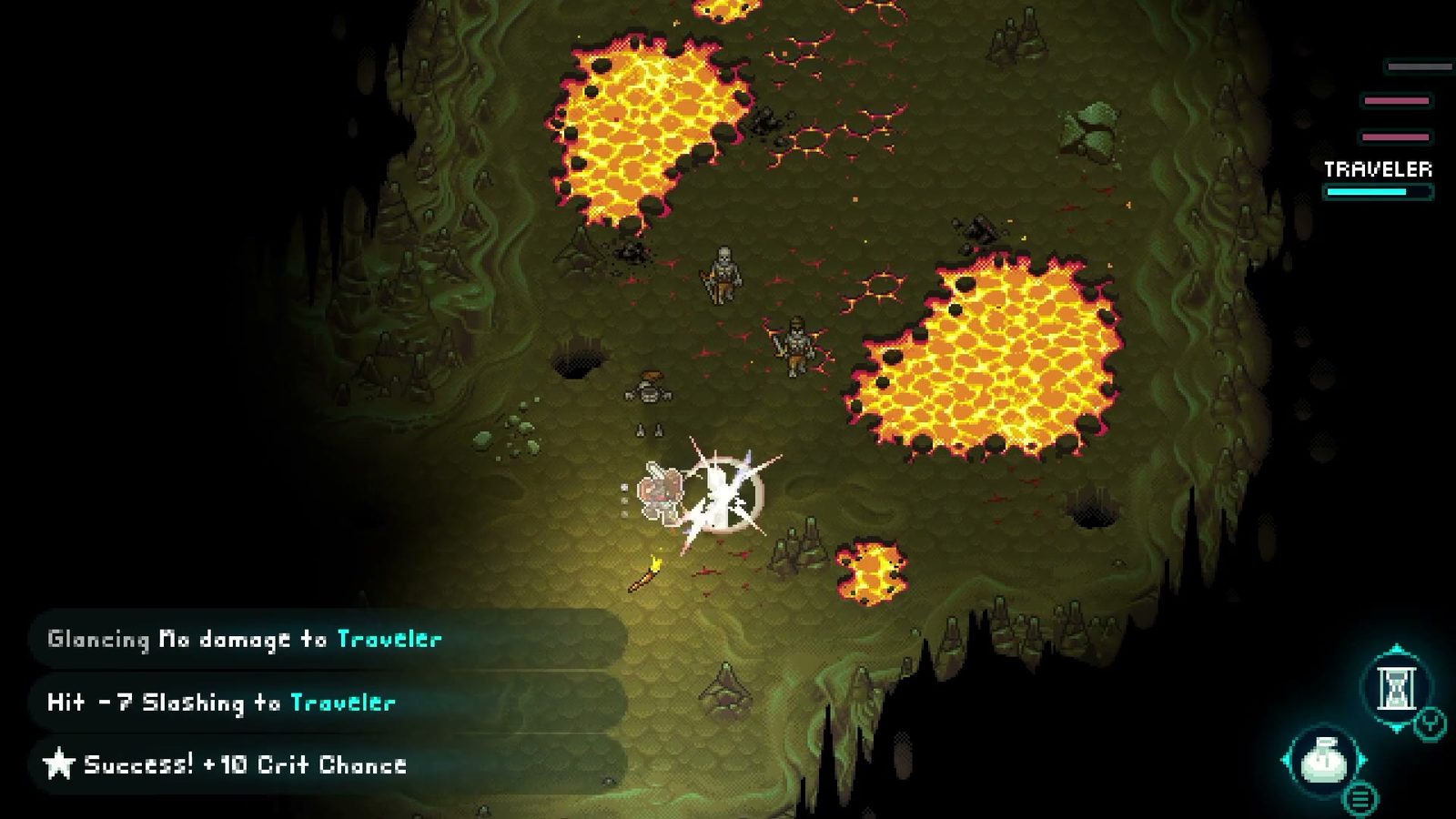 Official Steam screenshot
World of Anterra fights on two layers at once. There is a grid, and there are quick-time actions. The official wording is precise: "Combat blends quick-time actions with grid-based strategy", with a streamlined interface so that simple encounters can be blasted through and a skill ceiling that shows up against the harder enemies.
That combination explains what the studio has said about combat since. It is not a turn-based tactics RPG, and not an action RPG either: you place a party on a grid, hit your inputs when the moment comes, and prepare, because weaknesses, environmental mechanics and rare consumables are named as the tools that win hard fights.
The mechanics, in the studio's own terms
| Mechanic | What the official material says |
|---|---|
| Core loop | Quick-time actions blended with grid-based strategy |
| Pacing | Fast and effortless to get into, difficult to master |
| Interface | Streamlined so simple encounters can be blasted through with ease |
| Difficulty lever | Skill and strategy needed for the more challenging foes |
| Attack and defence | Skill-based mechanics for both attacking and defending |
| Party tools | Special abilities, magic spells and crafted items |
| Positioning | Strategic movement on the grid |
| Enemy design | Weaknesses, environmental mechanics and rare consumable items to exploit |
Everything in that table comes from the Steam store page. Nothing in it names a damage formula, a class, a cooldown or a stat, because the studio has not published any of those numbers.
Why the grid matters
A grid is a promise about space. In a grid fight, distance is discrete: you are either in range or you are not, and moving one tile changes what can hit you. That is what makes "strategic movement" a real decision rather than flavour text, and it is why the environment can be a mechanic instead of a backdrop.
The studio's water post shows the same design instinct in the world itself. Water depth slows creatures down unless they are aquatic, which is a movement rule expressed through terrain. In combat, the equivalent is terrain that changes what your party can do.
If you want the world-side version of that idea, read water, fishing and sailing, where depth is the mechanic.
What quick-time actions add
Quick-time actions put timing on top of positioning. The store page pairs them with attacking and defending, so the reasonable reading is that both your hits and your blocks ask for input at the right moment rather than resolving automatically.
The benefit is pacing: a pure grid fight can stall while you think, and a quick-time layer keeps the hands busy. The cost is that some players will fail inputs they understood, which is why the interface is streamlined.
Preparation is the real skill ceiling
The store page is direct about how hard fights are won: exploit weaknesses, use environmental mechanics, and spend rare consumable items to gain the upper hand. Two of those three levers are consumable.
That makes crafting and gathering combat systems by another name. Fuses can be found, purchased or crafted, according to the March 2026 explosion post, and Boom Barrels are volatile enough to be useful in combat as well as for mining in the Mancian Wastelands. A party that arrives with a bag of prepared items is a different party from one that arrives empty.
A full bag fights a different game from an empty one.
For the economy side of that, see crafting, camping and building, which covers resources, camps and the fuse loop.
Building a party that can do all three
The store page says you build party members from "a vast array of items and gear", and that the same animation layering system drives NPCs and creatures. For combat, that means your roster is defined by equipment rather than by a fixed class list.
Three implications follow from the official wording:
- Equipment is the build. With gear as the stated customisation layer, the answer to "what is my mage" is "whatever you equipped", not a class name.
- Visual layers mirror gear. Because the animation layering system renders what a character wears, you can read a party's loadout from the screen.
- Palette swaps multiply the roster. Palette swapping takes hand-animated assets to 2, 3 or even 10 times their count, which the studio ties directly to player customisation options.
The party and gear guide goes through that in detail.
Where the fights happen
The store page puts the fighting inside the world rather than in an arena. It lists towns, wild animals and monster-filled dungeons as the contents of the map, which tells you where encounters come from: wildlife in the open, monsters in the dungeons, and whatever is guarding the crypts, caves and houses that hold secrets.
That spread matters for preparation. A party tuned for one kind of enemy will meet a different kind after the next cave mouth, which is the argument for keeping a stocked bag rather than a single optimised loadout.
What the studio has not published
There is no class list, no skill tree, no damage table and no enemy compendium for World of Anterra. The store page describes combat in systems language and the announcements describe art and tools; neither publishes numbers.
That is normal for an unreleased game, and it is worth saying plainly because combat pages attract invented stat blocks. Anything quoting a damage percentage for this game today is not quoting 81monkeys.
How to prepare before launch
You cannot practise the combat system yet, but you can prepare for it in three ways that do not require guessing:
- Decide whether you want to play on keyboard or controller. Full controller support and DualShock/DualSense support are listed on the store page, and a grid game is often better on a pad.
- Read the PC requirements if you plan to run it on older hardware; frame drops hurt timing-based systems more than they hurt turn-based ones.
- If you plan to co-op, check the multiplayer tags for how many people can share a session.
Next
- Party and gear — how equipment and animation layers define your roster.
- Crafting, camping and building — the consumables that decide hard fights.
- World lore and factions — the factions behind the enemies you will meet.