
Water, fishing and sailing
Anterra has shallow and deep water environments with resources, creatures and enemies found only in or near water, plus fishing and sailing. Movement slows with depth unless the creature is aquatic.
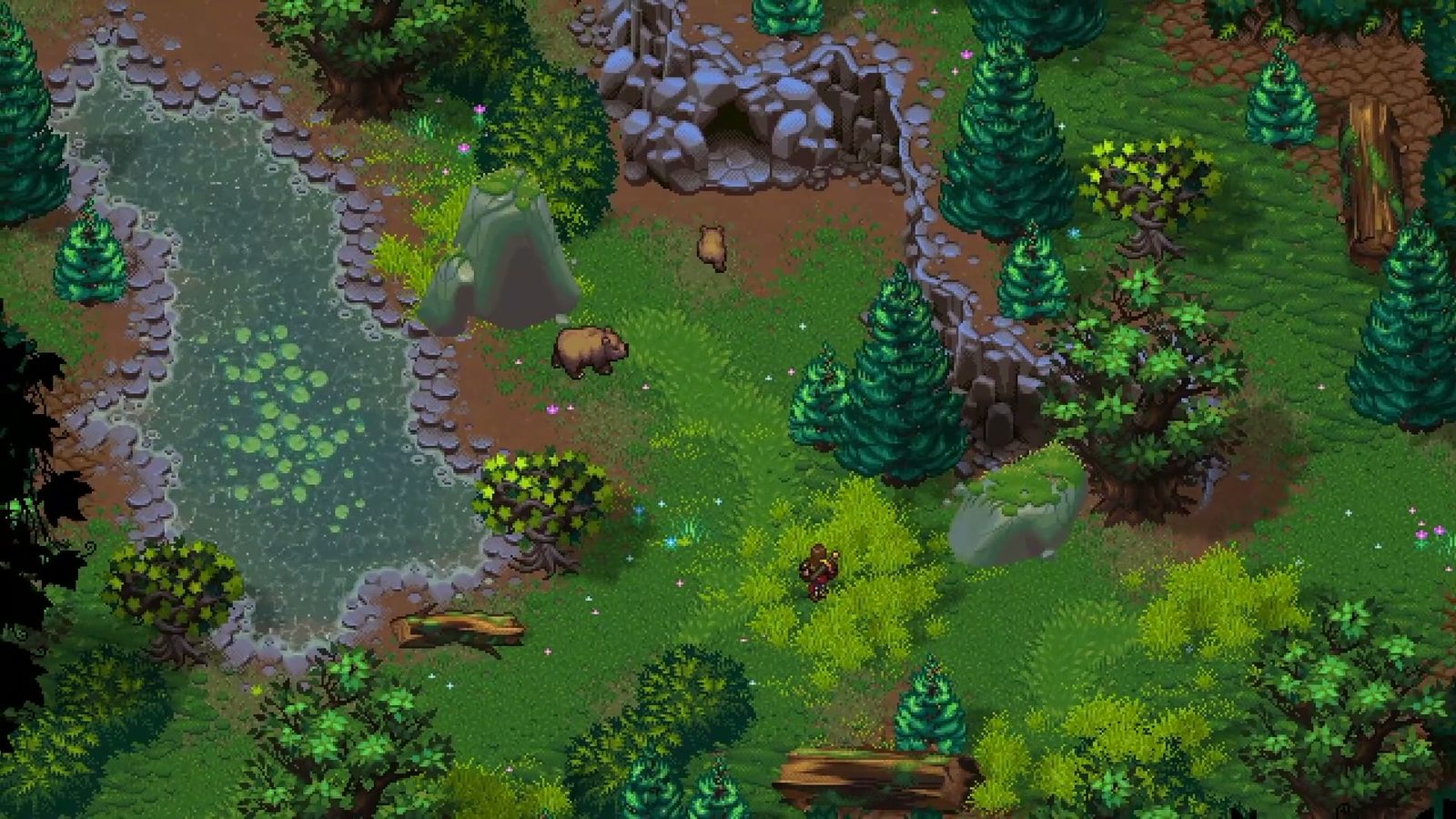 Official Steam trailer frame
Water in World of Anterra is not scenery. The studio's March 2026 post puts it plainly: water "factors into multiple game mechanics and features", with shallow and deep water environments, resources, creatures and enemies that can only be found in or near water, plus fishing and sailing.
That post is one of the most detailed pieces of technical writing 81monkeys has published, and it is worth reading as a design document rather than a graphics showcase. Everything below comes from it, alongside the store page's own water and weather lines.
The two water environments
| Environment | What the official material says |
|---|---|
| Shallow water | A distinct environment type; creatures wade and splash through it |
| Deep water | A second environment type; movement slows with depth unless the creature is aquatic |
| Water-only content | Resources, creatures and enemies found only in or near water |
| Fishing | Named by the official site activity list and the water post |
| Sailing | Named in the water post as a way to travel water |
| Visibility | You cannot see through bog water the way you can through clean ocean water |
| Terrain response | Feet splash, water is disrupted around a body as it gets deeper |
The design implication is that a river is a different zone, not a gap between two zones. If a resource or an enemy exists only in or near water, then every coastline and lake edge is worth walking.
Movement changes with depth
The post is specific about movement: creatures slow down based on the depth of the water, "unless they are water creatures of course". That is a simple rule with a large effect on how the world reads.
It means deep water is a barrier to land creatures and a road for aquatic ones, which is exactly the kind of asymmetry that makes terrain tactical. It also means a chase can change character at the waterline: something that outran you on land may lose you in the shallows.
The post's closing line is a joke with a mechanic inside it: "just be careful not to drown your horse". Mounts and water depth are, at minimum, a thing the studio has thought about.
How the water is drawn
The post explains the rendering in unusual detail, and the details matter because they explain why the water behaves the way it does in play.
- Refraction. Anything under the water is distorted, with pixels moving to reflect how light bends through water.
- Depth-based transparency. How far you can see through water depends on the depth and the type of water.
- Caustics. When the sun shines directly on the surface, light forms caustic patterns.
- Weather and time. Reflections change with time of day and conditions: sunlight refracts off the surface, the moon reflects at night, clouds reflect by day, raindrops cause ripples.
- Floating objects. Items on the surface, such as lily pads, move with the water.
All of that is done with shaders, small GPU programs that the post describes from first principles. For a 2D pixel-art game, that is an unusually modern pipeline, and it lines up with the store page's mention of water shaders and dynamic weather.
Fishing and sailing as systems
The official site lists fishing among the game's activities, and the water post groups it with sailing as things water makes possible. Neither has a dedicated explainer yet, so what is published is the existence of both rather than their rules.
Two things can still be said with confidence. First, fishing is part of a wider gathering economy: resources can be found in or near water, and the crafting and camping guide covers what those materials feed. Second, sailing implies water you cannot cross on foot, which is consistent with a world described as having oceans and continents.
Water types, not just depths
The post distinguishes water by type as well as by depth. Bog water is murky enough that you cannot see through it the way you can through clean ocean water, and the studio treats that as a design tool rather than a rendering accident.
For a player, murky water is a visibility rule: you step in without knowing what is under you. Clear water is the opposite, which makes the ocean the safer of the two despite being deeper. If you are exploring a swamp, assume the water is hiding something; if you are exploring a coast, assume you can see it coming.
The distinction also explains why the studio talks about "clean ocean water" in a post about shaders. Transparency is a gameplay property, and it is being authored per water body, not set globally.
What water means for a run
If you are planning how to explore Anterra, water changes three habits:
- Follow the coast. Water-only resources and enemies are a reason to walk the shoreline rather than cut inland.
- Watch the depth. Your party slows in deep water; anything aquatic does not. Pick fights accordingly.
- Fish when you rest. Fishing sits next to camping in the activity list, and both are things you do when you stop moving.
The world lore and factions guide covers the geography those oceans sit in.
Why this page exists before launch
Most unreleased games have nothing to say about their water. This one has a full technical post with headings, animated examples and a description of the shader work. That is a good signal about the studio's priorities: the world's physical behaviour is being treated as a feature, not a finish pass.
It is also a good signal about what to expect at launch. A game that slows creatures by water depth has thought about how terrain interacts with combat, and the combat system guide shows the same instinct on the grid.
The short version
Shallow water is a place you can fight in; deep water is a place that changes who can follow you; bog water is a place you cannot see into; and the ocean is the clean, readable edge of the map. Add fishing as a rest activity and sailing as a way to cross what you cannot walk, and water becomes one of the game's four or five structural layers rather than a decorative one.
Next
- Crafting, camping and building — what the water's resources feed.
- Combat system — how terrain and positioning interact on the grid.
- World lore and factions — the oceans, continents and ruins of Anterra.