
Progression and loot
The official site promises strong progression systems and the store page calls them deep. Power comes through party gear and items, while loot sits in containers, behind breakable objects and inside crypts, caves and houses.
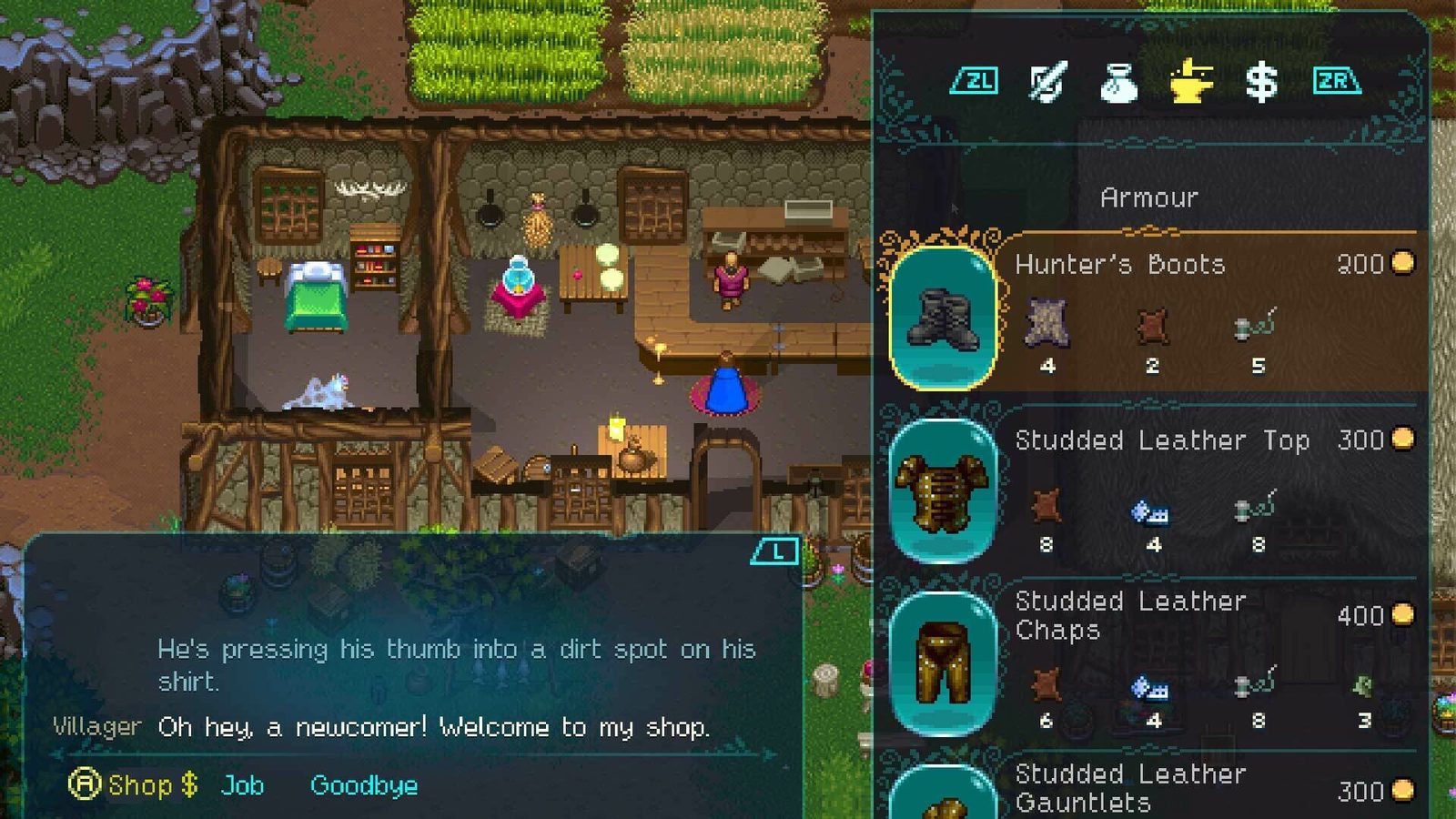 Official Steam screenshot
Progression in World of Anterra is described in two sentences, and both are about equipment. The official site promises "strong progression systems"; the Steam store page calls them "deep progression systems" and immediately explains that you build party members from "a vast array of items and gear". There is no level curve, no skill tree and no XP table in the public material.
That makes this a loot-first RPG in the literal sense: what makes your party stronger is what you find. This page maps the progression channels the studio has described, then covers where loot hides.
The progression channels
| Channel | What the official material says | Where it shows up |
|---|---|---|
| Party gear | Party members built from a vast array of items and gear | Store page, party and animation layering |
| Consumables | Rare consumable items swing difficult fights | Store page, combat paragraph |
| Crafted items | Crafted items listed alongside abilities and spells | Store page, combat paragraph |
| Customisation | Palette swapping multiplies assets 2x to 10x for player customisation | March 2026 announcement |
| Lore knowledge | Learn the history of magic and the ancient races by asking, reading and exploring | Store page |
| Map access | Oceans, continents, mountains, caves and dungeons to explore | Official site Key Features |
Read the last two rows as progression too: knowledge tells you where to go and what a dungeon is for, which is a different curve from a damage number and the one the studio talks about most.
Loot is placed, not dropped
The store page's looting sentence is unusually specific for a game this early in its marketing: secrets are found in crypts, caves and houses, in containers, and behind breakable objects.
That describes hand-placed loot rather than a drop table, and three habits follow:
- Breakables are worth hitting. A room is not finished when the enemies are dead.
- Buildings are content. Houses are named alongside crypts and caves, so interiors are part of the loot map.
- Containers are the baseline; the unusual cases are the ones behind destructible props.
For the tool that makes breakables practical, see Boom Barrels in the crafting and camping guide: a volatile mining substance that the studio says is also useful for exploration and combat.
Gear is also the character
Because party members are built from items and gear, and because a custom animation layering system renders what they wear, a piece of loot is simultaneously a stat change and a visual change. That is the loop the studio has chosen to show: find a thing, put it on a character, see it on the character.
Palette swapping extends this sideways rather than upwards. The studio's March 2026 post says the system lets "any number of the hundreds or thousands of hand-animated assets" scale up to two, three or even ten times the amount, and ties that directly to more player customisation options. In progression terms, that is breadth: more looks, more variants, more ways for two players' parties to differ.
The party and gear guide covers how those layers work technically.
What "deep" is likely to mean here
The word "deep" in a store description is marketing, but the surrounding sentences constrain it. The same paragraph lists non-linear quests, grid combat, lore and a tactile interface. Nothing in it suggests a numbers-heavy progression system with hundreds of levels.
What it does suggest is a system with several interlocking sources: gear you find, consumables you craft, knowledge you gather, and places you unlock. That is a breadth-first design, and it fits a handcrafted world where the studio's stated goal is exploration rather than grinding.
Reading a world that hides things
If loot is hand-placed behind breakables and inside buildings, then exploration has a method. Four habits follow from the official description:
- Search interiors. Houses are named as loot locations, so a town is not just a shop and a tavern.
- Test the furniture. Containers and breakable objects are the two stated hiding places, and both live indoors.
- Ask before you loot. Dialogue lets you type questions, and NPCs have schedules; a homeowner who steps out is a different opportunity from one who is watching.
- Bring a way to break things. Boom Barrels and their fuses are the named tool for this, and the fuse loop is craftable.
None of that requires a map or a datamined table. It requires the habit of treating a room as a container.
The knowledge loop is progression too
The store page tells you to uncover the mysteries of Anterra by asking questions, interacting with the environment, reading books and exploring, and says that is how you learn about the history of magic and the ancient races. That is not flavour text bolted to a combat game; it is a second progression track.
A player who reads the books knows which ruin belongs to which people, which faction is dangerous and why a door is sealed. A player who skips them has the same gear and fewer options. Since dialogue lets you type your own questions, the world is built to be interrogated, and the answers are the reward.
A first-session plan
If you want a routine for the first hours that does not depend on unpublished numbers, this one follows the official descriptions:
- Walk into a town and talk to people before you fight anything. Schedules and dialogue are the two documented sources of information.
- Search interiors properly. Houses are named as loot locations alongside crypts and caves.
- Test breakables. Containers and breakable objects are the two stated hiding places.
- Keep one expendable consumable in reserve for a fight you did not plan for.
What is not published
There is no level cap, no stat list, no rarity ladder and no drop-rate table for World of Anterra. The store page describes sources of power, not their magnitudes, and the announcements describe art pipelines rather than economy.
That is why this page talks about channels instead of numbers. When the studio publishes a progression post, this is the page that will grow a table of real values.
Next
- Party and gear — how found gear becomes a visible build.
- Crafting, camping and building — turning resources into consumables and tools.
- World lore and factions — the knowledge curve that unlocks the map.