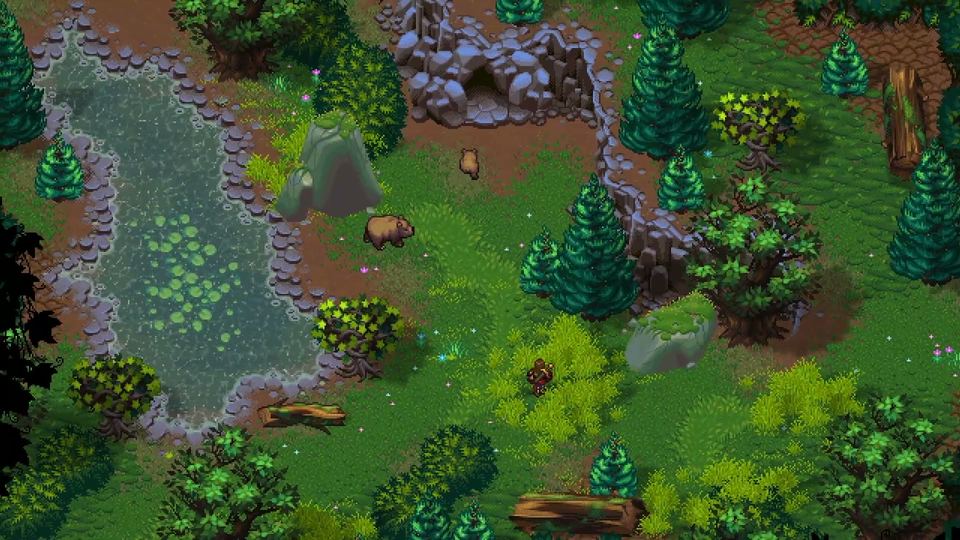
Beginner guide: the first hours
Start by talking, reading and searching: dialogue answers questions, books carry lore, and loot hides in containers and behind breakables. Gear is the build, so equip everything you find before you leave town.
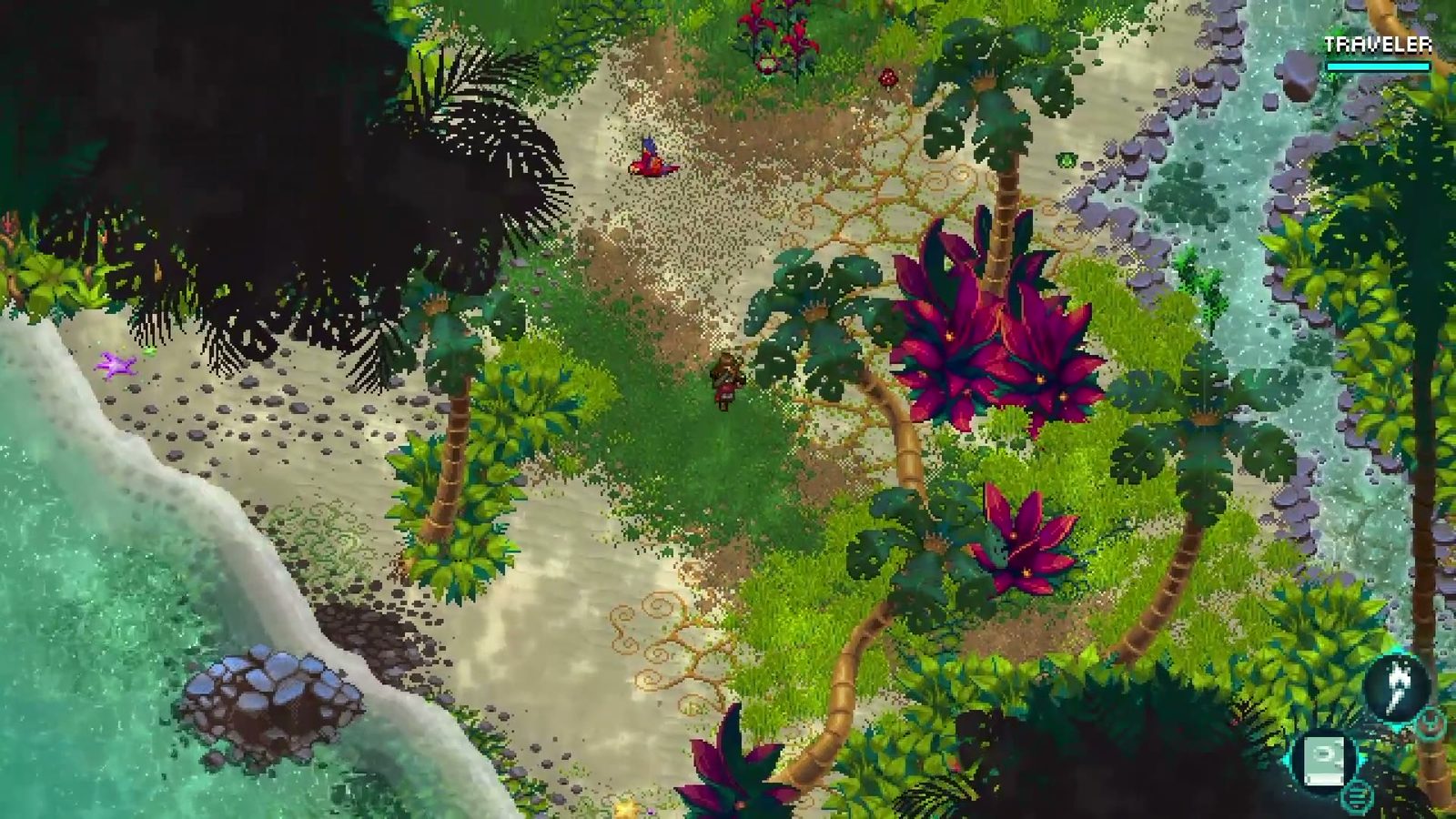 Official Steam screenshot
World of Anterra has no tutorial notes to copy, so a beginner guide has to be built out of what the studio has described. That is more useful than it sounds: the game's systems are specific enough that the first few hours have a shape, and the shape is not "follow the quest marker".
This page is the routine to use when you get a build, in the order that the official material implies.
The first ten minutes
The store page says you uncover Anterra's mysteries by asking questions, interacting with the environment, reading books and exploring. That sentence is the tutorial. Do those four things in the first town and the game tells you what it is.
| Step | What to do | Why the official material says so |
|---|---|---|
| 1 | Talk to everyone you pass | Dialogue is conversational, and you can type your own questions |
| 2 | Read the books and notes you find | Books are named as the source of the history of magic and the ancient races |
| 3 | Search rooms, not just chests | Secrets sit in containers and behind breakable objects |
| 4 | Look at who is where | NPCs work, socialise, eat and pursue hobbies on schedules |
| 5 | Check your gear screen | Party members are built from items and gear, not classes |
Nothing in that list requires a build. It is a description of what the game rewards.
Your party is your equipment
The single biggest mental adjustment is that there is no class. The store page says you build party members from "a vast array of items and gear", and a custom animation layering system renders what they wear.
Three practical rules follow:
- Loot everything wearable. A piece that does nothing for one member may define another.
- Dress for the fight you expect. Gear is the build, so the party screen is the loadout screen.
- Look at the sprite. Because gear is layered, the visual difference between two builds is real information.
The party and gear guide covers the system; the progression and loot guide covers where the pieces come from.
Combat: position first, timing second
Combat blends quick-time actions with grid-based strategy. Two habits make the first fights readable:
- Count the squares before you move. A grid means distance is discrete; one tile changes what can reach you.
- Keep one consumable for the fight you did not plan. The store page names rare consumable items as one of the three levers for hard fights, alongside weaknesses and environmental mechanics.
If the interface feels thin, that is deliberate: the studio says the UI is streamlined so simple encounters blast through quickly, and the difficulty shows up later. The combat guide goes through the layers.
Prepare before you leave town
The crafting loop exists to make expeditions survivable. Fuses can be found, purchased or crafted; Boom Barrels are the volatile tool the studio describes for mining in the Mancian Wastelands, also useful for exploration and combat.
A simple pre-trip checklist that follows the official description:
- Rest at the tavern before you leave; camps cover the road.
- Craft or buy the consumables you used last time.
- Fill any empty gear slot, even with a spare.
- Note the water: resources and enemies exist only in or near water, so a coast is content.
The crafting guide is the long version.
Money, shops and the first purchase
Shops exist by implication rather than by description: the studio says fuses can be "found, purchased, or crafted", and towns are described as thriving places with people at work.
If you want a rule for the first visit, buy consumables rather than gear. Gear appears in the world at a steady rate, while the item that saves a fight is exactly the thing you forgot to stock. The loot guide explains where each source sits.
Reading your save
There is no save-scumming advice to give for a game nobody has played, but there is one structural point worth knowing: quests diverge. The official site says the story follows "non-linear, divergent paths", which means a choice can close a route rather than delay it.
That is a reason to keep a second save before a conversation that feels consequential, and a reason not to restart when a town reacts badly. The game is built to be replayed along a different path; the dialogue and quests guide covers how those branches are delivered.
What not to expect
Four things are missing on purpose, because the studio has not announced them and this site does not invent them.
- No class list. Party roles come from gear.
- No tier list. There is no published roster to rank.
- No codes. There is no code system in the marketing.
- No walkthrough. The game is not out; any step-by-step route today would be fiction.
If you see a page claiming otherwise for this game, it is filling a gap with a guess.
Co-op from hour one, or later
Steam tags single-player, multi-player, online co-op, shared and split screen co-op and cross-platform multiplayer. The studio's FAQ adds that multiplayer was designed "to work in conjunction with our core single player gameplay systems", and that the single-player experience had to stand on its own first.
In practice that means you can start alone and add people later without feeling like you chose the wrong mode. The co-op guide has the tag list and what each one implies.
A checklist for the first session
If you want one page to keep open, make it this one:
- Walk the town, talk to people, read what is on the shelves.
- Test a breakable object and a container.
- Open the party screen and equip everything you found.
- Fight something small and count tiles before you commit.
- Rest, craft, then leave by the water if there is water.
That sequence touches every system the studio has described, and it should take about an hour of play to complete.
Next
- Combat system — the grid and the quick-time layer in detail.
- Party and gear — how equipment becomes a build.
- World map and regions — where to walk first.